Multivariate Linear Regression: Concepts and Implementation
Comprehensive guide to multivariate linear regression, covering multiple input features, model formulation, assumptions, cost function, gradient descent optimization, and evaluation techniques.

Multi Variant Linear Regression
Linear regression with multiple variables is also known as "multivariate linear regression".
Suppose y is function of multiple variables x then
Xcolumn(row) : X(i, j)
- m = number of training example
- n = number of feature in training example
- x(i) = ith row in training example/ feature in example
- xj(i) = ith row , jth column in training example
Linear Regression for Hypothesis for n features :
hΘ(x) = Θ0X0 +Θ1X1 +Θ1 X2+ Θ1 X3+ ...ΘnXn
Assume X0= 1 for convenience
hΘ(x) = Θ0X0 +Θ1X1 +Θ1 X2+ Θ1 X3+ ...ΘnXn
hΘ(x) = ΘTX
Inner Product of RowVector0(1n) Column VectorX(n1) = Scalar()11 Hypothesis
Notes:
- ΘT is a 1 by (n+1) matrix and not an (n+1) by 1 matrix
- x0(i) =1 for matrix multiplication
Simple Linear Regression
Cost function:
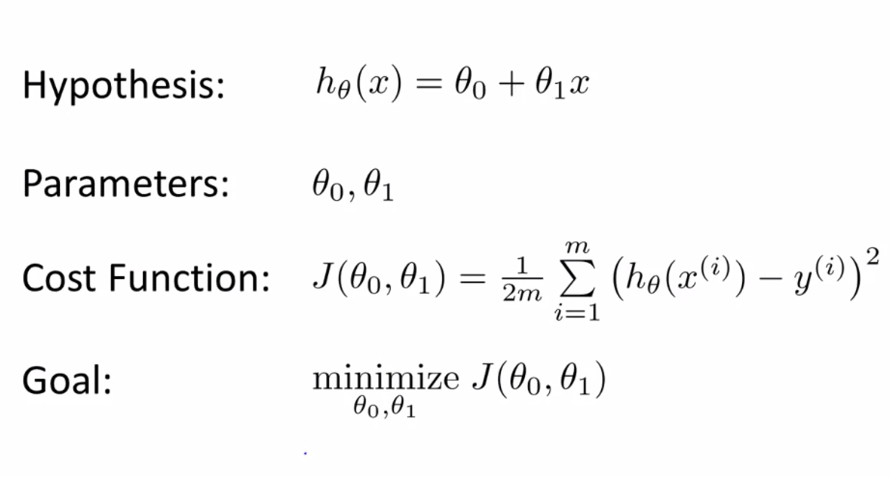
   J(Theta0, Theta1) =  1/2m(Sum((predicted-actual)**2))
                     =  1/2m(Sum((h(xi)-y(i))**2))
                     =  1/2number of dataSet(Sum of Deviation from actual)**Squared to remove negative
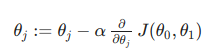
Gradient Descent:
Steps:
-
For feature index j= 0,1, repeat until convergence
-
Simultaneous compute Theta(0), Theta (1) and store in temp values
-
Simultaneous Update Theta(0), Theta (1)
Multi variant Linear Regression
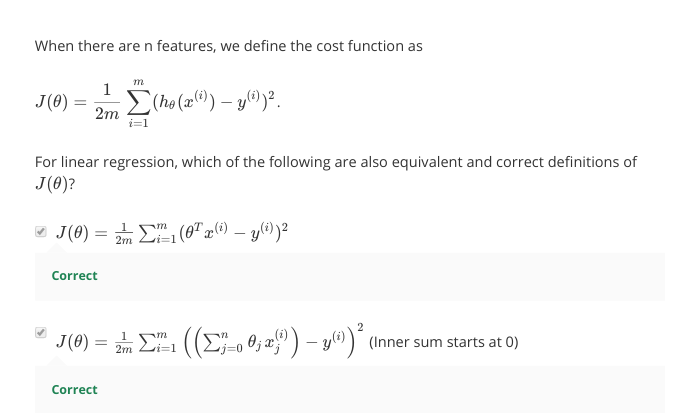
Cost Function
  J(Theta0, Theta1, Theta.....Thetam) =  1/2m(Sum((predicted-actual)**2))
                         =  1/2m(Sum((h(xi)-y(i))**2))
                         =  1/2number of dataSet(Sum of Deviation from actual)**Squared to remove negative
J(Theta) = 1/2m(Sum((predicted-actual)**2))
Gradient Descent:
Steps:
-
For feature index j= 0,1,....n repeat until convergence

-
Simultaneous compute Theta(0), Theta (1), .... Theta (n) and store in temp values
-
Simultaneous Update Theta(0), Theta (1) .... Theta (n)
Feature scaling
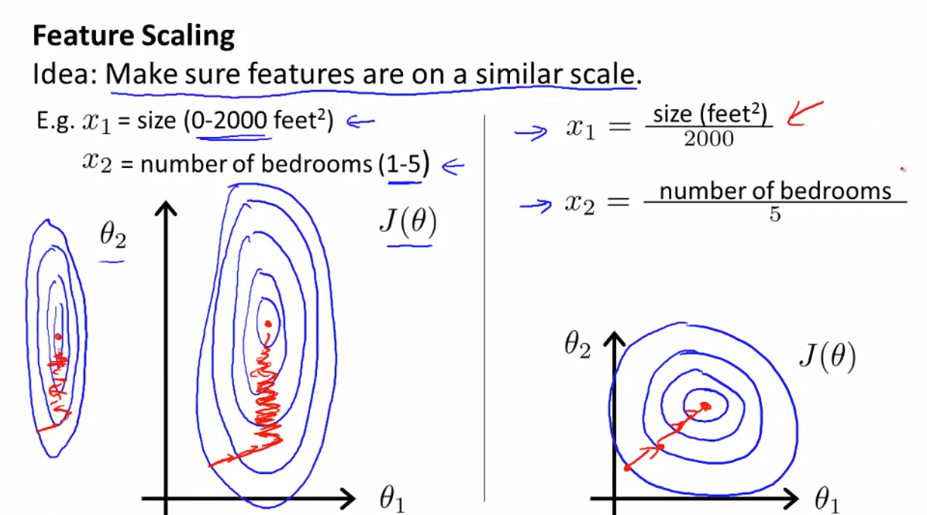
Make sure feature are on same scale other wise contour will be skew elliptical(2000/5). Gradient descent on skew Eclipse take long time to reach local minima
xi = (xi--min(X))/(max(X)-min(X))
- Try to get feature into -1<= xi<= 1. Long gape will not fully scaled. Idellay should be withing range -3 to +3.
Feature scaling is way to avoid creating skew ellipse:
Mean Normalization
Use mean and max range to normalize x values
xi = (xi-Avg(X))/(max(X)-min(X))
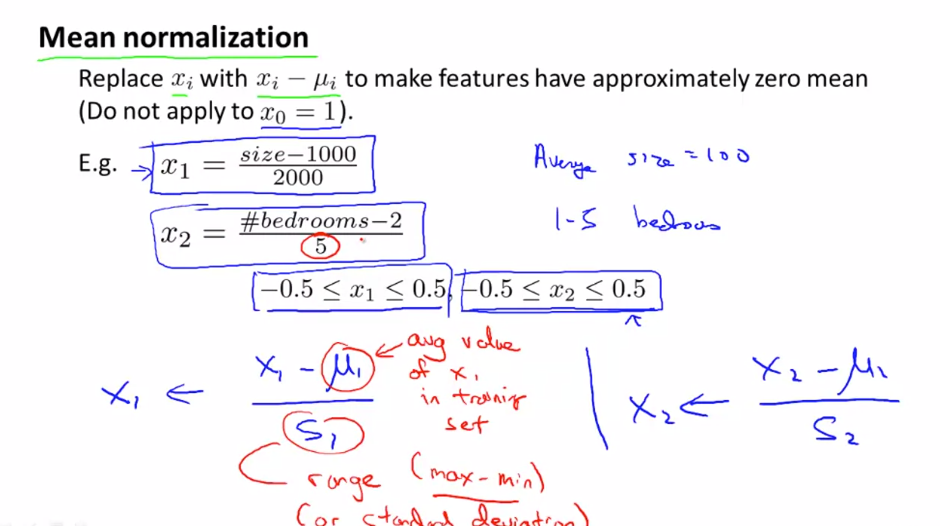
xi = (xi-Avg(X))/(max(X)-min(X))
Debugging gradient descent using Learning Rate
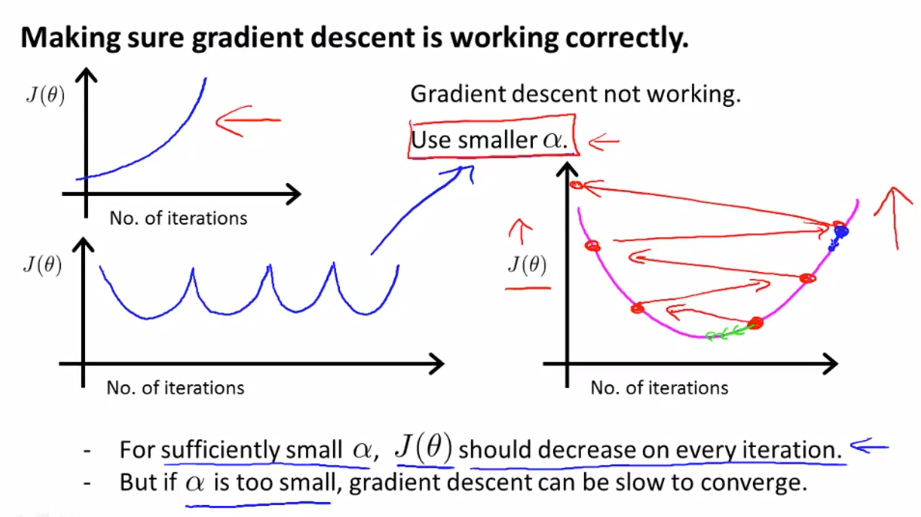
plot the cost function, J(θ) over the number of iterations of gradient descent. If J(θ) ever increases, then you probably need to decrease α.
-
If α is too small: slow convergence.
-
If α is too large: may not decrease on every iteration and thus may not converge.
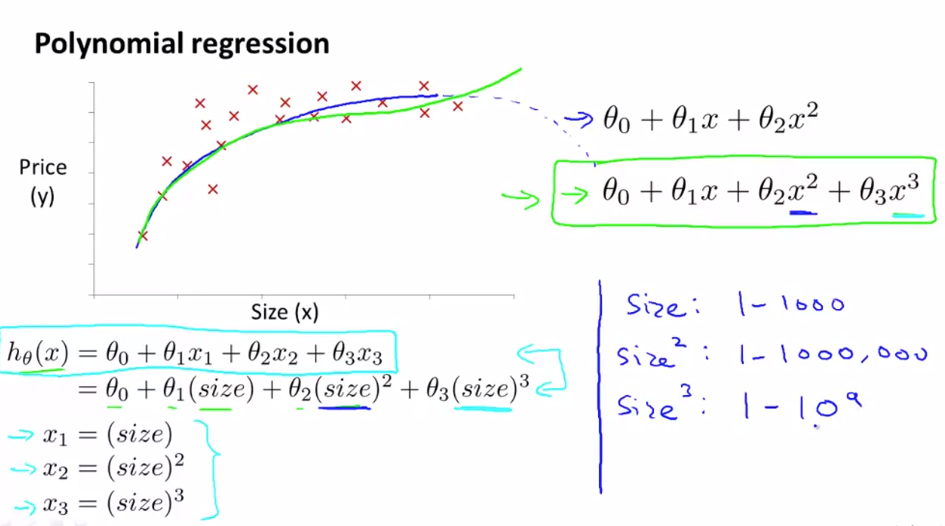
Polynomial Regression
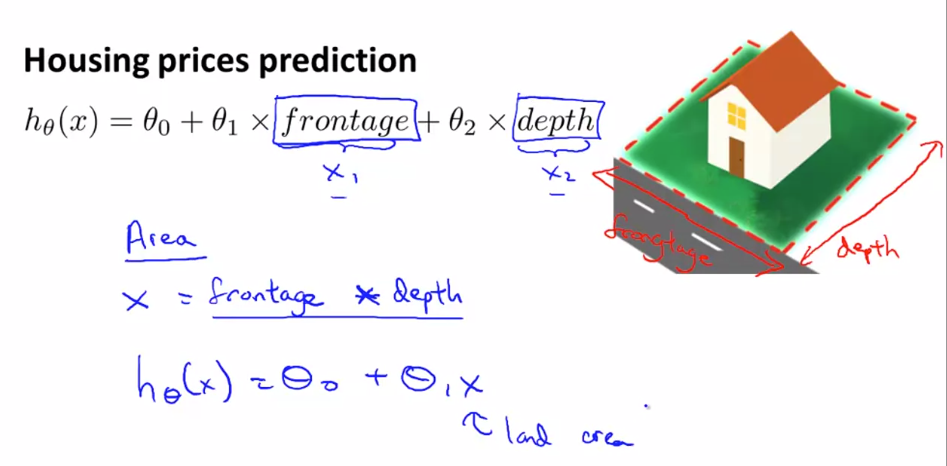
Sometimes by defining a new feature you might get a better Model that requires less computation
for example house price can defined by calculating area instead of creating 2 variable equation we can define one variable equation :
- Sometimes prediction fits Polynomial equation instead of linear equation
- Scaling of feature becomes crucial in Polynomial Regression
- Some algo can choose feature to fit polynomial curves